Skip to content Skip to footer
The Complete Guide to Rubber Tubing: Materials, Applications & More

Key Takeaways

From transporting fluids and gases to protecting cables and absorbing vibration, rubber tubing plays a vital role in countless industrial applications. Its flexibility, durability, and ability to withstand demanding operating conditions make it a preferred solution across industries such as manufacturing, agriculture, food processing, automotive, construction, and chemical processing. With a wide range of materials and configurations available, selecting the right tubing is essential to ensure reliable performance, safety, and long service life.

This guide explores what rubber tubing is, the different types of rubber tubing, how it is manufactured, and the materials used to meet specific application requirements. You’ll also learn what rubber tubing is used for, how to choose the right tubing for your operating environment, common issues that can affect performance, and practical tips to help maximize its service life.

What Is Rubber Tubing?

Rubber tubing is a flexible, hollow conduit made from natural or synthetic rubber compounds to transport fluids, air, gases, and, in some applications, fine granular materials. It is engineered for specific operating conditions, with the material and construction selected based on factors such as temperature, pressure, chemical compatibility, and environmental exposure.

Rubber tubing vs. rubber hose

While often used interchangeably, rubber tubing and rubber hose serve different purposes.

Rubber tubing is manufactured entirely from rubber, making it highly flexible and suitable for a wide range of fluid and air transfer applications. Rubber hose, on the other hand, incorporates reinforcing layers, such as textile plies, wire braids, or wire helices, between the rubber layers. This reinforced construction enables it to withstand higher pressures and more demanding operating conditions.

Key features of rubber tubing

Some of the key features of industrial rubber tubing include:

  • High flexibility for easy routing and installation
  • Available in materials all polymers including Natural Rubber tubing, EPDM rubber tubing, Nitrile Rubber Tubing, and Silicone Rubber Tubing
  • Resistance to abrasion, weather, chemicals, or oils, depending on the material
  • Custom sizes and profiles for specific industrial application

How Is Rubber Tubing Made?

The performance of rubber tubing depends not only on the material used but also on how it is manufactured. Each stage of the process influences the tubing’s flexibility, durability, and overall reliability.

Rubber Compound Selection

The process begins with selecting the right rubber compound based on the intended application. Common materials include Natural rubber, EPDM, nitrile, silicone, and neoprene, each offering different levels of resistance to heat, chemicals, oils, weather, and abrasion. Additives are blended into the compound to achieve the desired performance characteristics.

Extrusion Process

For smaller diameter tubing, the prepared rubber compound is fed through an extruder, where it is forced through a precision die to create tubing with the required inside diameter, outside diameter, and wall thickness. 

Vulcanization (Curing)

After extrusion, the tubing undergoes vulcanization, or curing, where heat is applied to form strong cross-links within the rubber. This process enhances elasticity, strength, chemical resistance, and durability, ensuring the tubing performs reliably under demanding operating conditions.

Finishing & Quality Control

Once cured, the tubing is cut to the required lengths and inspected for dimensional accuracy, surface quality, and overall performance. Manufacturers may also conduct pressure, flexibility, and material tests to ensure the finished product meets application requirements and quality standards.

Larger diameter tubing is typically built on a mandrel where the rubber compound is spiralled onto the mandrel with enough layers to build the wall and outside diameter to the required size. Then it gets wrapped on the outside with a removable fabric and placed into a vulcanizer to cure.

Types of Rubber Tubing by Material

Different rubber compounds offer unique performance characteristics, making them suitable for specific operating environments. Choosing the right material depends on factors such as temperature, chemical exposure, flexibility, abrasion resistance, and the media being conveyed. 

EPDM Rubber Tubing

EPDM rubber tubing is a synthetic elastomer known for its excellent resistance to heat, weather, ozone, and steam. It offers long-lasting flexibility and performs well in outdoor and water-based applications. However, it is not suitable for petroleum oils and fuels.

  • Approximate temperature range: -40°C to 150°C
  • Typical industries: HVAC, water treatment, agriculture
  • Common applications: Coolant lines, hot water systems, outdoor equipment

Nitrile (NBR) Rubber Tubing

Nitrile Rubber Tubing is designed for applications involving oils, fuels, and grease. It provides excellent oil resistance and good abrasion resistance but offers only moderate resistance to weather and ozone.

  • Approximate temperature range: -30°C to 120°C
  • Typical industries: Automotive, manufacturing, oil and gas
  • Common applications: Fuel lines, hydraulic systems, lubricant transfer

Silicone Rubber Tubing

Silicone Rubber Tubing offers exceptional flexibility across a wide temperature range and is commonly used where cleanliness or high-temperature performance are essential. While it has excellent thermal stability, it is less resistant to tearing and abrasion than some other rubber materials.

  • Approximate temperature range: -60°C to 230°C
  • Typical industries: Food processing, medical, pharmaceutical
  • Common applications: Food transfer, laboratory equipment, medical devices

Neoprene Rubber Tubing

Neoprene rubber tubing provides a balanced combination of weather, oil, and chemical resistance. It is a versatile material for general industrial use but is not ideal for prolonged exposure to strong solvents or extreme temperatures.

  • Approximate temperature range: -35°C to 120°C
  • Typical industries: Marine, construction, manufacturing
  • Common applications: Air lines, protective sleeves, fluid transfer

Natural Rubber Tubing

Natural rubber tubing is valued for its excellent elasticity, flexibility, and abrasion resistance. Although it performs well in water-based applications, it has limited resistance to oils, ozone, and outdoor weathering.

  • Approximate temperature range: -50°C to 80°C
  • Typical industries: Agriculture, mining, general manufacturing
  • Common applications: Cement and aggregate transfer, slurry handling and bulk powder transfer.

Butyl Rubber Tubing

Butyl rubber tubing offers excellent resistance to moisture and gas permeation, making it suitable for sealed systems. Its primary limitation is reduced compatibility with petroleum-based fluids.

  • Approximate temperature range: -45°C to 120°C
  • Typical industries: Chemical processing, pharmaceutical and inner tubes
  • Common applications: Gas transfer, vacuum systems, chemical handling

Viton (FKM) Tubing

Viton (FKM) tubing is engineered for demanding environments involving aggressive chemicals, fuels, and high temperatures. It delivers exceptional chemical resistance but is typically more expensive than other rubber compounds.

  • Approximate temperature range: -20°C to 200°C
  • Typical industries: Aerospace, chemical processing, petrochemical
  • Common applications: Chemical transfer, fuel systems, high-temperature equipment

SBR Rubber Tubing

SBR rubber tubing is an economical option for general-purpose applications. It offers good abrasion resistance but is less resistant to oils, ozone, and weather than many specialty elastomers.

  • Approximate temperature range: -50°C to 100°C
  • Typical industries: Construction, agriculture, manufacturing
  • Common applications: Air and water transfer, material handling and general industrial service

Types of Rubber Tubing by Construction

In addition to material, rubber tubing can also be classified by its construction. The manufacturing method and structural design determine the tubing’s flexibility, strength, pressure capacity, and suitability for specific applications. 

Extruded Rubber Tubing

Extruded rubber tubing is manufactured by forcing a rubber compound through a die to create a continuous tube with consistent dimensions. It is commonly used in low to moderate pressure applications that require flexibility and cost-effective performance.

Rubber Sleeves

Rubber sleeves are thick-walled extruded rubber components designed to protect, insulate, or connect equipment rather than transfer fluids. They are commonly used to provide abrasion protection, vibration isolation, and sealing in industrial machinery and mechanical assemblies.

Custom Rubber Tubing

Custom rubber tubing is manufactured to meet specific dimensional, material, or performance requirements. It can be produced in custom sizes, wall thicknesses, colours, or rubber compounds to suit unique industrial applications where standard tubing may not provide the required fit or performance.

Multi-Layer Rubber Tubing

Multi-layer rubber tubing combines different rubber compounds into separate layers, with each layer providing a specific performance benefit, such as chemical resistance, flexibility, or abrasion protection. This construction is often used in applications with multiple operating demands

Applications of Rubber Tubing

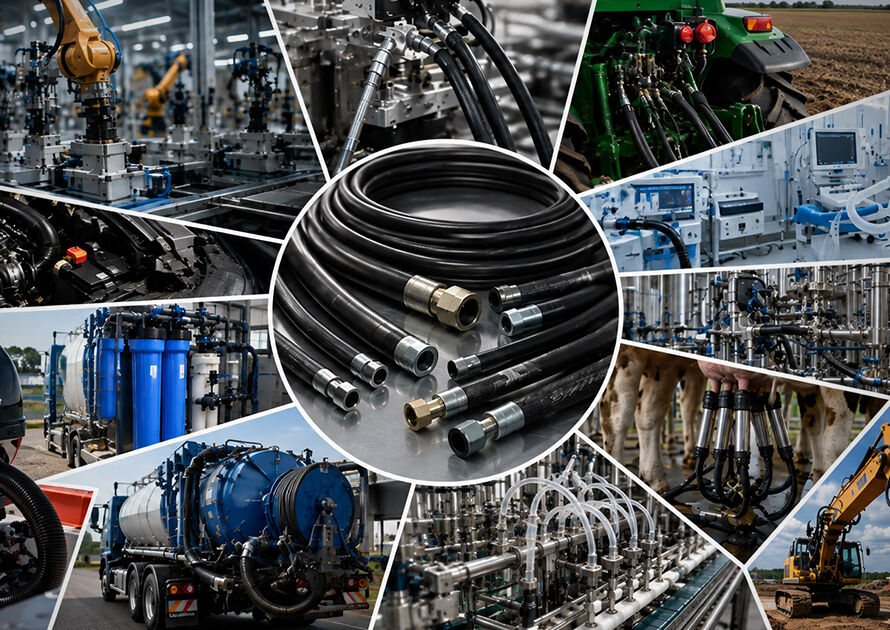
One of the biggest advantages of rubber tubing is its versatility. Its flexibility, durability, and availability in different materials make it suitable for a wide range of industries and operating environments.

Industrial applications

Industrial rubber tubing is widely used in manufacturing facilities for transferring fluids, air, and other media between equipment. It is also used as protective sleeves, flexible connectors, and insulation components in equipment where flexibility, durability, and resistance to wear are required.

Food and beverage

Food-grade rubber tubing supports hygienic operations by safely transferring beverages and liquids. It is also commonly used in cleaning and sanitation systems designed to maintain food safety standards.

Medical and laboratory

Medical and laboratory environments use rubber tubing for sample transfer, fluid handling, and other specialized applications that require clean, flexible, and non-reactive materials. Silicone tubing is often preferred for these environments.

Agriculture

Rubber tubing plays an important role in agricultural operations, including irrigation systems, fertilizer transfer, and general liquid handling. Its flexibility and weather resistance make it well suited for outdoor use.

Automotive and mechanical

Automotive and industrial equipment rely on rubber tubing for coolant circulation, vacuum systems, and the transfer of fuels and lubricants. Selecting the appropriate material helps ensure reliable performance under varying temperatures and operating conditions.

Other specialty uses

Beyond these industries, rubber tubing is also used in cement and aggregate plants, marine equipment, construction machinery, chemical processing plants, and OEM assemblies where application-specific materials and custom configurations are required. Rubber tubing is often used for pinch valves where its flexibility allows it to be pinched closed to act as a stopping mechanism to regulate the flow of materials.

How to Choose the Right Rubber Tubing (Step-by-Step)

Selecting the right rubber tubing involves more than matching the size. Evaluating the operating environment and performance requirements helps ensure reliable, long-term performance.

Understand the Application

Start by identifying what the tubing will carry, how it will be used, and the operating conditions it will face. This helps narrow down the most suitable material and construction.

Select the Right Rubber Material

Choose a material based on the application’s requirements. For example, EPDM rubber tubing is well suited for water and outdoor use, Nitrile Rubber Tubing performs well with oils and fuels, while Silicone Rubber Tubing is ideal for high-temperature and sanitary applications.

Consider Temperature

Ensure the tubing can withstand both the normal operating temperature and any temperature fluctuations without losing its performance or flexibility.

Evaluate Chemical Compatibility

Verify that the rubber compound is compatible with the fluid or gas being transferred. Incompatible materials may swell, harden, crack, or degrade over time.

Determine Pressure Requirements

Consider the system’s working pressure when selecting rubber tubing. For higher-pressure applications, a reinforced rubber hose may be more appropriate, while rubber tubing is generally used for low to moderate pressure applications. 

Choose the Correct Size

Selecting the right dimensions is essential for efficient flow and a secure fit.

  • Inside Diameter (ID): Determines the flow capacity.
  • Outside Diameter (OD): Ensures compatibility with fittings and equipment.
  • Wall Thickness: Influences pressure handling, durability, and flexibility.

Flexibility Requirements

Consider the tubing’s bend radius and routing. Applications with frequent movement or tight installation spaces require tubing that can flex without kinking.

Environmental Conditions

If the tubing will be exposed to UV rays, ozone, moisture, or outdoor weather, choose a material designed to withstand those conditions to maximise service life.

Industry Standards

Depending on the application, the tubing may need to comply with recognised standards and regulations, such as:

  • FDA for food contact applications
  • USP for medical and pharmaceutical uses
  • ASTM for material and performance specifications
  • SAE for automotive applications
  • RoHS, where applicable, for restricted hazardous substances

Common Rubber Tubing Problems & How to Prevent Them

Even high-quality rubber tubing can fail if it is used outside its intended operating conditions. Regular inspection and proper material selection can help prevent these common issues.

Cracking

  • Cause: UV exposure, ozone, ageing
  • Symptoms: Surface cracks and reduced flexibility
  • Prevention: Use weather-resistant materials and store away from direct sunlight.

Swelling

  • Cause: Incompatible oils, fuels, or chemicals
  • Symptoms: Increased diameter, softening, distortion
  • Prevention: Select a rubber compound that is chemically compatible with the media.

Abrasion

  • Cause: Constant rubbing against equipment or rough surfaces
  • Symptoms: Worn inner or outer surface 
  • Prevention: Use abrasion-resistant tubing and secure it properly during installation.

Hardening

  • Cause: Prolonged heat exposure or ageing
  • Symptoms: Loss of flexibility and brittle tubing
  • Prevention: Choose a material rated for the operating temperature and inspect it regularly.

Chemical Attack

  • Cause: Exposure to aggressive or incompatible chemicals
  • Symptoms: Cracking, swelling, discoloration, or leaks
  • Prevention: Verify chemical compatibility before installation.

Kinking

  • Cause: Tight bends or incorrect routing
  • Symptoms: Restricted flow and permanent bends
  • Prevention: Maintain the recommended bend radius, use longer lengths and use appropriate supports where needed.

Heat Damage

  • Cause: Operating above the material’s temperature limit
  • Symptoms: Softening, deformation, or premature failure
  • Prevention: Select tubing designed for the application’s temperature range.

Improper Storage

  • Cause: Exposure to sunlight, moisture, heat, or ozone during storage
  • Symptoms: Premature ageing, cracking, or loss of elasticity
  • Prevention: Store tubing in a cool, dry place away from direct sunlight and ozone-producing equipment.

FAQs

Custom rubber tubing is designed to meet specific requirements for size, material, pressure, temperature, and application, helping improve performance and service life.

The lifespan depends on the service, material, operating conditions, and maintenance. Properly selected and maintained tubing can provide years of reliable service.

Common materials include natural rubber, EPDM, nitrile (NBR), silicone, neoprene, butyl, Viton (FKM), and SBR. Each offers different performance characteristics for specific applications.

Inspect tubing regularly for cracks, swelling, or wear. Clean it as needed, avoid exceeding its pressure and temperature limits, and store it in a cool, dry place away from direct sunlight.

Depending on the application, rubber tubing may need to comply with standards such as FDA, USP, ASTM, SAE, or RoHS.

Standard rubber tubing is manufactured in common sizes and materials for general applications. Custom rubber tubing is engineered to meet specific performance, dimensional, or environmental requirements.

Key Takeaways

  • Rubber tubing is a versatile solution for transferring fluids, gases, and air across a wide range of industries.
  • Selecting the right tubing depends on the material, application, operating temperature, pressure, chemical compatibility, and environmental conditions.
  • Choosing the correct material and construction helps improve performance, safety, and service life.
  • For applications with unique performance requirements, contact Home Rubber for application-specific tubing guidance.
The Art & Science of Rubber

Home Rubber has delivered high-quality rubber solutions for over a century.
Whether big or small, standard or custom, we have the expertise to get it
right every time.

Looking for a custom rubber solution?
We’re ready to help.

Office

31 Woolverton Avenue, Trenton, NJ 08611

P.O. Box 878, Trenton, NJ 08605

© 2026. Home Rubber Company. All rights reserved.

Key Takeaways

From transporting fluids and gases to protecting cables and absorbing vibration, rubber tubing plays a vital role in countless industrial applications. Its flexibility, durability, and ability to withstand demanding operating conditions make it a preferred solution across industries such as manufacturing, agriculture, food processing, automotive, construction, and chemical processing. With a wide range of materials and configurations available, selecting the right tubing is essential to ensure reliable performance, safety, and long service life.

This guide explores what rubber tubing is, the different types of rubber tubing, how it is manufactured, and the materials used to meet specific application requirements. You’ll also learn what rubber tubing is used for, how to choose the right tubing for your operating environment, common issues that can affect performance, and practical tips to help maximize its service life.

What Is Rubber Tubing?

Rubber tubing is a flexible, hollow conduit made from natural or synthetic rubber compounds to transport fluids, air, gases, and, in some applications, fine granular materials. It is engineered for specific operating conditions, with the material and construction selected based on factors such as temperature, pressure, chemical compatibility, and environmental exposure.

Rubber tubing vs. rubber hose

While often used interchangeably, rubber tubing and rubber hose serve different purposes.

Rubber tubing is manufactured entirely from rubber, making it highly flexible and suitable for a wide range of fluid and air transfer applications. Rubber hose, on the other hand, incorporates reinforcing layers, such as textile plies, wire braids, or wire helices, between the rubber layers. This reinforced construction enables it to withstand higher pressures and more demanding operating conditions.

Key features of rubber tubing

Some of the key features of industrial rubber tubing include:

  • High flexibility for easy routing and installation
  • Available in materials all polymers including Natural Rubber tubing, EPDM rubber tubing, Nitrile Rubber Tubing, and Silicone Rubber Tubing
  • Resistance to abrasion, weather, chemicals, or oils, depending on the material
  • Custom sizes and profiles for specific industrial application

How Is Rubber Tubing Made?

The performance of rubber tubing depends not only on the material used but also on how it is manufactured. Each stage of the process influences the tubing’s flexibility, durability, and overall reliability.

Rubber Compound Selection

The process begins with selecting the right rubber compound based on the intended application. Common materials include Natural rubber, EPDM, nitrile, silicone, and neoprene, each offering different levels of resistance to heat, chemicals, oils, weather, and abrasion. Additives are blended into the compound to achieve the desired performance characteristics.

Extrusion Process

For smaller diameter tubing, the prepared rubber compound is fed through an extruder, where it is forced through a precision die to create tubing with the required inside diameter, outside diameter, and wall thickness. 

Vulcanization (Curing)

After extrusion, the tubing undergoes vulcanization, or curing, where heat is applied to form strong cross-links within the rubber. This process enhances elasticity, strength, chemical resistance, and durability, ensuring the tubing performs reliably under demanding operating conditions.

Finishing & Quality Control

Once cured, the tubing is cut to the required lengths and inspected for dimensional accuracy, surface quality, and overall performance. Manufacturers may also conduct pressure, flexibility, and material tests to ensure the finished product meets application requirements and quality standards.

Larger diameter tubing is typically built on a mandrel where the rubber compound is spiralled onto the mandrel with enough layers to build the wall and outside diameter to the required size. Then it gets wrapped on the outside with a removable fabric and placed into a vulcanizer to cure.

Types of Rubber Tubing by Material

Different rubber compounds offer unique performance characteristics, making them suitable for specific operating environments. Choosing the right material depends on factors such as temperature, chemical exposure, flexibility, abrasion resistance, and the media being conveyed. 

EPDM Rubber Tubing

EPDM rubber tubing is a synthetic elastomer known for its excellent resistance to heat, weather, ozone, and steam. It offers long-lasting flexibility and performs well in outdoor and water-based applications. However, it is not suitable for petroleum oils and fuels.

  • Approximate temperature range: -40°C to 150°C
  • Typical industries: HVAC, water treatment, agriculture
  • Common applications: Coolant lines, hot water systems, outdoor equipment

Nitrile (NBR) Rubber Tubing

Nitrile Rubber Tubing is designed for applications involving oils, fuels, and grease. It provides excellent oil resistance and good abrasion resistance but offers only moderate resistance to weather and ozone.

  • Approximate temperature range: -30°C to 120°C
  • Typical industries: Automotive, manufacturing, oil and gas
  • Common applications: Fuel lines, hydraulic systems, lubricant transfer

Silicone Rubber Tubing

Silicone Rubber Tubing offers exceptional flexibility across a wide temperature range and is commonly used where cleanliness or high-temperature performance are essential. While it has excellent thermal stability, it is less resistant to tearing and abrasion than some other rubber materials.

  • Approximate temperature range: -60°C to 230°C
  • Typical industries: Food processing, medical, pharmaceutical
  • Common applications: Food transfer, laboratory equipment, medical devices

Neoprene Rubber Tubing

Neoprene rubber tubing provides a balanced combination of weather, oil, and chemical resistance. It is a versatile material for general industrial use but is not ideal for prolonged exposure to strong solvents or extreme temperatures.

  • Approximate temperature range: -35°C to 120°C
  • Typical industries: Marine, construction, manufacturing
  • Common applications: Air lines, protective sleeves, fluid transfer

Natural Rubber Tubing

Natural rubber tubing is valued for its excellent elasticity, flexibility, and abrasion resistance. Although it performs well in water-based applications, it has limited resistance to oils, ozone, and outdoor weathering.

  • Approximate temperature range: -50°C to 80°C
  • Typical industries: Agriculture, mining, general manufacturing
  • Common applications: Cement and aggregate transfer, slurry handling and bulk powder transfer.

Butyl Rubber Tubing

Butyl rubber tubing offers excellent resistance to moisture and gas permeation, making it suitable for sealed systems. Its primary limitation is reduced compatibility with petroleum-based fluids.

  • Approximate temperature range: -45°C to 120°C
  • Typical industries: Chemical processing, pharmaceutical and inner tubes
  • Common applications: Gas transfer, vacuum systems, chemical handling

Viton (FKM) Tubing

Viton (FKM) tubing is engineered for demanding environments involving aggressive chemicals, fuels, and high temperatures. It delivers exceptional chemical resistance but is typically more expensive than other rubber compounds.

  • Approximate temperature range: -20°C to 200°C
  • Typical industries: Aerospace, chemical processing, petrochemical
  • Common applications: Chemical transfer, fuel systems, high-temperature equipment

SBR Rubber Tubing

SBR rubber tubing is an economical option for general-purpose applications. It offers good abrasion resistance but is less resistant to oils, ozone, and weather than many specialty elastomers.

  • Approximate temperature range: -50°C to 100°C
  • Typical industries: Construction, agriculture, manufacturing
  • Common applications: Air and water transfer, material handling and general industrial service

Types of Rubber Tubing by Construction

In addition to material, rubber tubing can also be classified by its construction. The manufacturing method and structural design determine the tubing’s flexibility, strength, pressure capacity, and suitability for specific applications. 

Extruded Rubber Tubing

Extruded rubber tubing is manufactured by forcing a rubber compound through a die to create a continuous tube with consistent dimensions. It is commonly used in low to moderate pressure applications that require flexibility and cost-effective performance.

Rubber Sleeves

Rubber sleeves are thick-walled extruded rubber components designed to protect, insulate, or connect equipment rather than transfer fluids. They are commonly used to provide abrasion protection, vibration isolation, and sealing in industrial machinery and mechanical assemblies.

Custom Rubber Tubing

Custom rubber tubing is manufactured to meet specific dimensional, material, or performance requirements. It can be produced in custom sizes, wall thicknesses, colours, or rubber compounds to suit unique industrial applications where standard tubing may not provide the required fit or performance.

Multi-Layer Rubber Tubing

Multi-layer rubber tubing combines different rubber compounds into separate layers, with each layer providing a specific performance benefit, such as chemical resistance, flexibility, or abrasion protection. This construction is often used in applications with multiple operating demands

Applications of Rubber Tubing

One of the biggest advantages of rubber tubing is its versatility. Its flexibility, durability, and availability in different materials make it suitable for a wide range of industries and operating environments.

Industrial applications

Industrial rubber tubing is widely used in manufacturing facilities for transferring fluids, air, and other media between equipment. It is also used as protective sleeves, flexible connectors, and insulation components in equipment where flexibility, durability, and resistance to wear are required.

Food and beverage

Food-grade rubber tubing supports hygienic operations by safely transferring beverages and liquids. It is also commonly used in cleaning and sanitation systems designed to maintain food safety standards.

Medical and laboratory

Medical and laboratory environments use rubber tubing for sample transfer, fluid handling, and other specialized applications that require clean, flexible, and non-reactive materials. Silicone tubing is often preferred for these environments.

Agriculture

Rubber tubing plays an important role in agricultural operations, including irrigation systems, fertilizer transfer, and general liquid handling. Its flexibility and weather resistance make it well suited for outdoor use.

Automotive and mechanical

Automotive and industrial equipment rely on rubber tubing for coolant circulation, vacuum systems, and the transfer of fuels and lubricants. Selecting the appropriate material helps ensure reliable performance under varying temperatures and operating conditions.

Other specialty uses

Beyond these industries, rubber tubing is also used in cement and aggregate plants, marine equipment, construction machinery, chemical processing plants, and OEM assemblies where application-specific materials and custom configurations are required. Rubber tubing is often used for pinch valves where its flexibility allows it to be pinched closed to act as a stopping mechanism to regulate the flow of materials.

How to Choose the Right Rubber Tubing (Step-by-Step)

Selecting the right rubber tubing involves more than matching the size. Evaluating the operating environment and performance requirements helps ensure reliable, long-term performance.

Understand the Application

Start by identifying what the tubing will carry, how it will be used, and the operating conditions it will face. This helps narrow down the most suitable material and construction.

Select the Right Rubber Material

Choose a material based on the application’s requirements. For example, EPDM rubber tubing is well suited for water and outdoor use, Nitrile Rubber Tubing performs well with oils and fuels, while Silicone Rubber Tubing is ideal for high-temperature and sanitary applications.

Consider Temperature

Ensure the tubing can withstand both the normal operating temperature and any temperature fluctuations without losing its performance or flexibility.

Evaluate Chemical Compatibility

Verify that the rubber compound is compatible with the fluid or gas being transferred. Incompatible materials may swell, harden, crack, or degrade over time.

Determine Pressure Requirements

Consider the system’s working pressure when selecting rubber tubing. For higher-pressure applications, a reinforced rubber hose may be more appropriate, while rubber tubing is generally used for low to moderate pressure applications. 

Choose the Correct Size

Selecting the right dimensions is essential for efficient flow and a secure fit.

  • Inside Diameter (ID): Determines the flow capacity.
  • Outside Diameter (OD): Ensures compatibility with fittings and equipment.
  • Wall Thickness: Influences pressure handling, durability, and flexibility.

Flexibility Requirements

Consider the tubing’s bend radius and routing. Applications with frequent movement or tight installation spaces require tubing that can flex without kinking.

Environmental Conditions

If the tubing will be exposed to UV rays, ozone, moisture, or outdoor weather, choose a material designed to withstand those conditions to maximise service life.

Industry Standards

Depending on the application, the tubing may need to comply with recognised standards and regulations, such as:

  • FDA for food contact applications
  • USP for medical and pharmaceutical uses
  • ASTM for material and performance specifications
  • SAE for automotive applications
  • RoHS, where applicable, for restricted hazardous substances

Common Rubber Tubing Problems & How to Prevent Them

Even high-quality rubber tubing can fail if it is used outside its intended operating conditions. Regular inspection and proper material selection can help prevent these common issues.

Cracking

  • Cause: UV exposure, ozone, ageing
  • Symptoms: Surface cracks and reduced flexibility
  • Prevention: Use weather-resistant materials and store away from direct sunlight.

Swelling

  • Cause: Incompatible oils, fuels, or chemicals
  • Symptoms: Increased diameter, softening, distortion
  • Prevention: Select a rubber compound that is chemically compatible with the media.

Abrasion

  • Cause: Constant rubbing against equipment or rough surfaces
  • Symptoms: Worn inner or outer surface 
  • Prevention: Use abrasion-resistant tubing and secure it properly during installation.

Hardening

  • Cause: Prolonged heat exposure or ageing
  • Symptoms: Loss of flexibility and brittle tubing
  • Prevention: Choose a material rated for the operating temperature and inspect it regularly.

Chemical Attack

  • Cause: Exposure to aggressive or incompatible chemicals
  • Symptoms: Cracking, swelling, discoloration, or leaks
  • Prevention: Verify chemical compatibility before installation.

Kinking

  • Cause: Tight bends or incorrect routing
  • Symptoms: Restricted flow and permanent bends
  • Prevention: Maintain the recommended bend radius, use longer lengths and use appropriate supports where needed.

Heat Damage

  • Cause: Operating above the material’s temperature limit
  • Symptoms: Softening, deformation, or premature failure
  • Prevention: Select tubing designed for the application’s temperature range.

Improper Storage

  • Cause: Exposure to sunlight, moisture, heat, or ozone during storage
  • Symptoms: Premature ageing, cracking, or loss of elasticity
  • Prevention: Store tubing in a cool, dry place away from direct sunlight and ozone-producing equipment.

FAQs

Custom rubber tubing is designed to meet specific requirements for size, material, pressure, temperature, and application, helping improve performance and service life.

The lifespan depends on the service, material, operating conditions, and maintenance. Properly selected and maintained tubing can provide years of reliable service.

Common materials include natural rubber, EPDM, nitrile (NBR), silicone, neoprene, butyl, Viton (FKM), and SBR. Each offers different performance characteristics for specific applications.

Inspect tubing regularly for cracks, swelling, or wear. Clean it as needed, avoid exceeding its pressure and temperature limits, and store it in a cool, dry place away from direct sunlight.

Depending on the application, rubber tubing may need to comply with standards such as FDA, USP, ASTM, SAE, or RoHS.

Standard rubber tubing is manufactured in common sizes and materials for general applications. Custom rubber tubing is engineered to meet specific performance, dimensional, or environmental requirements.

Key Takeaways

  • Rubber tubing is a versatile solution for transferring fluids, gases, and air across a wide range of industries.
  • Selecting the right tubing depends on the material, application, operating temperature, pressure, chemical compatibility, and environmental conditions.
  • Choosing the correct material and construction helps improve performance, safety, and service life.
  • For applications with unique performance requirements, contact Home Rubber for application-specific tubing guidance.